AristotleWalks by Masako

  • @AristotleWalks
  • Thoughts
  • Photos

Summaries

Primary-Summaries Summaries

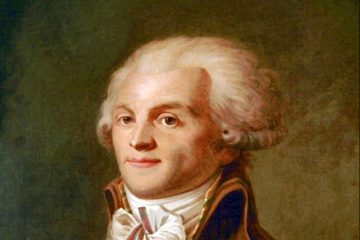
Robespierre, Maximilien. Republic of Virtue (1794).

Key passages from Maximilien Robespierre’s speech, “Republic of Virtue”, during the Reign of Terror, which officially sentenced 16,594 people to death.

By Masako, 6 yearsJune 28, 2020 ago
Secondary-Summaries Summaries

Lockl & Schneider (2007)

Summary of “Knowledge About the Mind: Links Between Theory of Mind and Later Metamemory” by Kathrin Lockl & Wolfgang Scneider. Photo: Hope Kean at MIT
By Masako, 6 yearsJune 11, 2020 ago
Aristotle Primary-Summaries Summaries

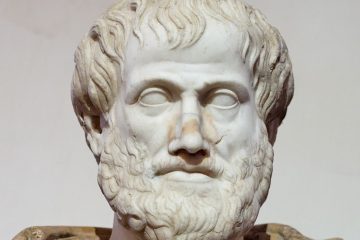
Aristotle’s Biology

Notes & passages that interest me from Aristotle’s works on biology 🙂 Photo: Wikimedia Commons.

By Masako, 6 yearsJune 9, 2020 ago
Favourites Homepage Summaries

Collective Responsibility: An Infographic

Post by Melanie Berman & Masako Toyoda. Collective Guilt vs. Collective Responsibility. Photo: Hannah Arendt & Professor Simon Gikandi (Princeton University)

By Masako, 6 yearsJune 7, 2020 ago
Primary-Summaries Summaries

Du Bois, W.E.B. “The Study of the Negro Problems” (1898).

Quotations from the famous essay “The Study of the Negro Problems” by W.E.B. Du Bois in 1898. Photo: London Trees.

By Masako, 6 yearsJune 7, 2020 ago
Summaries

Proust, Joëlle. “Metacognition”. (2010)

Summary of “Metacognition” by Joëlle Proust. Photo: Hope Kean at Evlab, MIT

By Masako, 6 yearsJune 3, 2020 ago
Summaries

Mercier & Miton (2019)

Summary of “Utilizing simple cues to informational dependency” by Hugo Mercier (CNRS, Paris) & Helena Miton (CEU, Budapest). Photo: Hope Kean at Evlab, MIT

By Masako, 6 yearsMay 28, 2020 ago
Summaries

Hegselmann & Krause (2009)

Summary of “Deliberative Exchange, Truth, and Cognitive Division of Labour: A Low-Resolution Modeling Approach by Rainer Hegselmann & Ulrich Krause. Photo: Hope Kean at Evlab, MIT

By Masako, 6 yearsMay 27, 2020 ago
Summaries

Anon, Social Influence

Some notes on a paper on Social Influence by an anonymous CogSci submission. Photo: Hope Kean 🙂

By Masako, 6 yearsMay 21, 2020 ago
Aristotle Summaries

Charles, David. “Aristotle’s Psychological Theory”. (2008)

Summary of David Charles’ lovely paper “Aristotle’s Pscyhological Theory”. Photo from Wikimedia Commons.

By Masako, 6 yearsMay 7, 2020 ago

Posts pagination

1 2 3 Next
Telos

One of the key parts to living a full, harmonious, and great life – according to Aristotle – is to become an excellent human being. What does it mean to be an excellent human being? To have developed your rationality in line with truth and to have developed the virtues of prudence, generosity, courage, honesty, wit, friendliness, temperance, and magnanimity. Which ones are you working to develop?

Eudaimonia

Commonly translated as "happiness", it's helpful to think of this as 'flourishing', 'thriving', or 'living your best life'. "Eu" is good and "daimon" is a god/spirit that watches over you. So if you live a eudaimonic life, the gods/spirits are watching over your life well :)


  • @AristotleWalks
  • Thoughts
  • Photos
Hestia | Developed by ThemeIsle